
Understanding Manitowoc Ice Machine Parts: Essential Components, Troubleshooting, and Replacement Guide
Commercial ice machines are the backbone of restaurants, hotels, bars, and healthcare facilities. Among the industry’s most trusted brands, Manitowoc ice machines stand out for their durability, efficiency, and advanced controls. However, like any heavy-duty commercial equipment, regular maintenance and occasional component replacements are required to keep them producing crystal-clear ice reliably.
Whether you’re managing a busy commercial kitchen, running a convenience store, or overseeing equipment maintenance, understanding key Manitowoc ice machine parts will help you diagnose issues early, prevent costly downtime, and keep your unit operating at peak efficiency.
1. Core Components of a Manitowoc Ice Machine
To troubleshoot or service a Manitowoc ice unit effectively, it helps to understand how its critical electronic and mechanical parts work together.
A. Electronic Control Boards (PC Boards)
The control board serves as the brain of the ice machine. It manages operational cycles—from freeze to harvest—by reading signals from sensors and controlling mechanical components like pumps, valves, and compressors.
- Legacy Control Boards: Found on older Manitowoc series (such as Q-Series or S-Series), these boards use LED indicators to display basic diagnostic status codes.
- Indigo & Indigo NXT Control Boards: Modern Manitowoc units utilize advanced touchpad control boards featuring backlit display screens. These boards continuously monitor operating parameters, display real-time diagnostic error codes, track energy and water usage, and offer custom preventive maintenance reminders.
B. Water Level Sensor Probes & Thickness Controls
Proper ice formation depends heavily on precise water management:
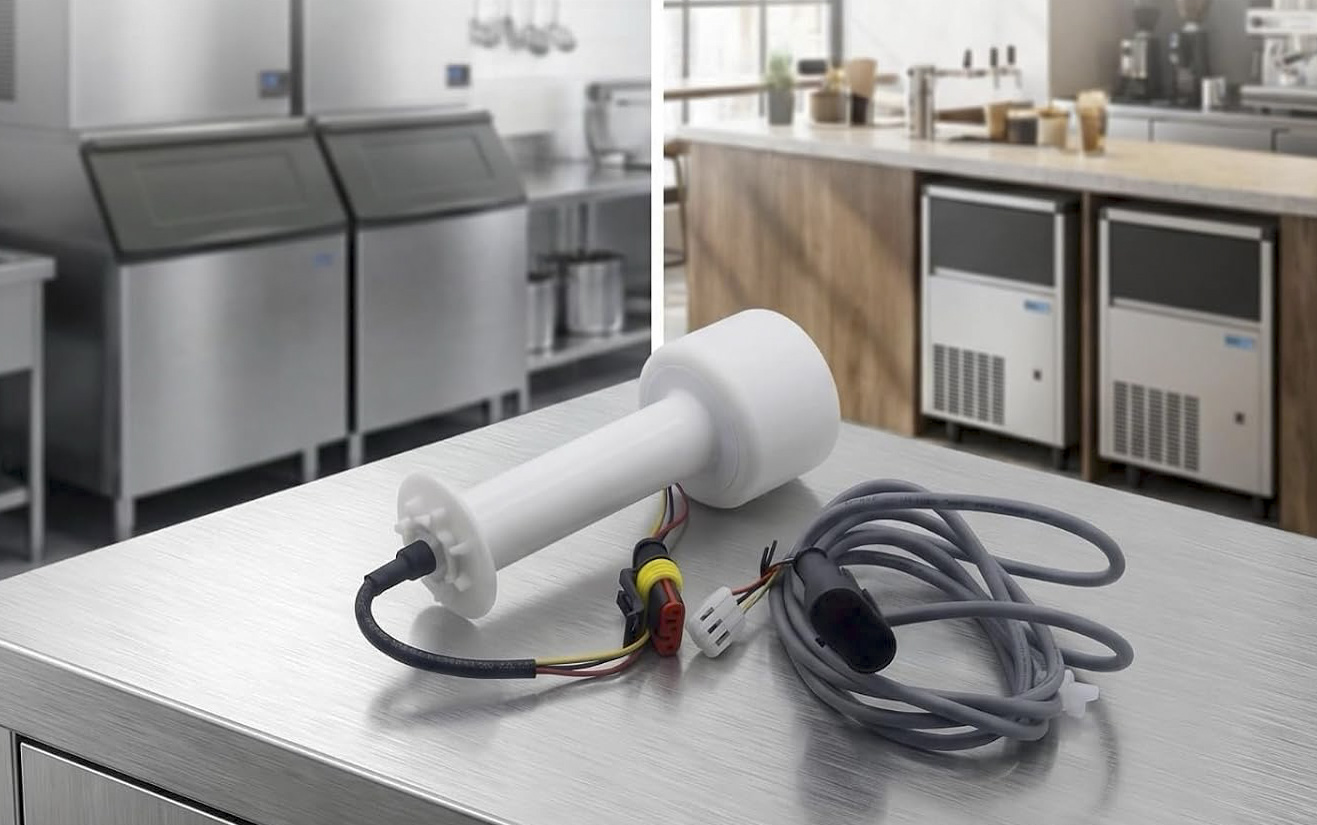
- Water Level Sensor Probe: Detects the water level inside the trough or sump. It signals the control board when to open or close the water inlet valve, preventing overflows and ensuring adequate water supply for the freeze cycle.
- Ice Thickness Float Switch / Probe: Positioned near the evaporator grid, this component detects when ice bridges have reached the proper thickness, initiating the harvest cycle.
C. Water Pumps & Distribution Systems
The water pump circulates water from the trough over the chilled evaporator plate. A failing pump or clogged spray bar causes uneven water distribution, resulting in incomplete ice bridge formation, thin or hollow cubes, or extended freeze cycles.
D. Harvest Components (Hot Gas Valves & Water Curtain Switches)
- Hot Gas Harvest Valve: When triggered by the control board, this valve redirects warm refrigerant gas to heat the evaporator grid, causing frozen ice slabs to release.
- Water Curtain & Dump Valve Switch: As ice drops from the evaporator plate, it pushes open the water curtain. The curtain switch signals the board that ice has harvested successfully and starts a new cycle. If the curtain stays open or fails to signal, the machine shuts down to prevent freeze-ups.
2. Common Symptoms & Troubleshooting Tips
Recognizing common warning signs can save hours of troubleshooting time:
| Problem Symptom | Possible Faulty Component | Quick Diagnostic Action |
| Machine won’t start / No display | Control Board, Fuse, or Power Switch | Check main power supply, check fuses on the control board, and verify touchpad ribbon cable connection. |
| Ice cubes are too thin or misshapen | Ice Thickness Probe or Water Level Sensor | Clean mineral scale off the water level probe and ice thickness sensor using approved nickel-safe cleaner. |
| Unit stuck in Freeze Cycle (won’t harvest) | Hot Gas Valve, Harvest Sensor, or Control Board | Inspect the hot gas valve coil; verify if the ice thickness probe is reaching the correct trigger threshold. |
| Machine shuts down after harvest | Magnetic Water Curtain Switch | Ensure the curtain swings freely and the magnetic contact switches trigger cleanly when released. |
| Water continuously runs into drain | Water Inlet Valve or Drain Valve | Inspect the purge/drain valve for scale buildup preventing a complete seal. |
3. Best Practices for Replacing Manitowoc Parts
When performing repairs or scheduled maintenance on Manitowoc ice machines, follow these steps to protect your investment:
- Always Use Genuine OEM Parts: Original equipment manufacturer (OEM) replacement components—such as certified Manitowoc control boards, sensor probes, and pumps—ensure exact voltage, mechanical fit, and long-term reliability.
- Safely Power Down: Always disconnect electric power and turn off the water supply line before opening access panels or touching internal wiring.
- Regular Scale Removal & Cleaning: Mineral buildup from hard water is the leading cause of premature sensor and pump failure. Perform regular descaling using nickel-safe ice machine cleaner to keep sensors accurate and extend component lifespan.
- Verify Model & Serial Numbers: Always check the serial tag on the back or inside panel of your ice unit to confirm exact model compatibility before purchasing replacement parts.
Keep Your Equipment Running Smoothly
Understanding how your Manitowoc ice machine’s electronic and water-system components operate makes troubleshooting simple and straightforward. By keeping key replacement parts on hand—like water level probes, float switches, and backup control modules—you can minimize costly downtime and maintain uninterrupted ice production.